 Cursor Flow
How to Speak Up in Meetings as an Introvert: A Calm Plan
Struggle to speak up in meetings? A practical plan for introverts: prepare in writing, claim one early moment, and follow up after. No personality change.
On this page
As an introvert, I think best when I can write things down first. This guide is built around that idea. It works with your personality instead of against it.
Why speaking up feels so hard
The APA Dictionary of Psychology describes introverts as relatively more reserved, quiet and deliberate. "Deliberate" is the key word. Many introverts want to think a point through before saying it. Most meetings reward the opposite: the first person to speak shapes the discussion.
So the problem is often timing, not confidence. By the time your idea is ready, the meeting has moved on, and bringing it back feels awkward.
Common thoughts at that moment:
- "Someone else probably thought of this already."
- "It is too late to go back to that point."
- "If I say it badly, everyone will notice."
Before the meeting: do your thinking in writing
Ask for the agenda
If there is no agenda, ask for one. "Could you share the topics beforehand so I can prepare?" is a reasonable request and helps everyone.
Write two points and one question
For each meeting, write down:
- One opinion or suggestion.
- One piece of information others may not have.
- One question.
Keep each to one or two sentences. You will not always use them, but having them ready removes most of the pressure.
Practice the first sentence
The first sentence is the hardest. Have it ready word for word: "I want to add something on the timeline." After that, the rest comes more easily.
During the meeting: claim one early moment
Speak in the first ten minutes
The longer you wait, the bigger the moment feels. Say something small early: agree with a point and add a detail, or ask your prepared question. Once you have spoken once, the next time feels normal.
Use bridging phrases
These buy you time and make joining the conversation easier:
- "Going back to what Sara said..."
- "Can I add one thing before we move on?"
- "I have a question about that."
It is fine to say "let me think about that"
If someone asks you something you need time on, say: "Good question. Let me think and send you a proper answer today." That is a professional answer, not a weak one.
Keep notes as you listen
Writing down what others say helps you spot gaps and gives you something concrete to respond to. If typing during the meeting feels loud, write on your phone.
After the meeting: the follow-up is your advantage
Introverts are often better in writing than in the room. Use that.
- Send a short message with the idea you did not get to say.
- Summarise the decisions and next steps. People value this a lot.
- Add any data or links you mentioned.
A good written follow-up often has more influence than a quick comment in the meeting, because people can read it, forward it and come back to it.
A practical note: writing many follow-ups after back-to-back meetings is tiring. Dictating a first draft is faster than typing, but talking to your laptop at your desk right after a meeting can feel very visible.
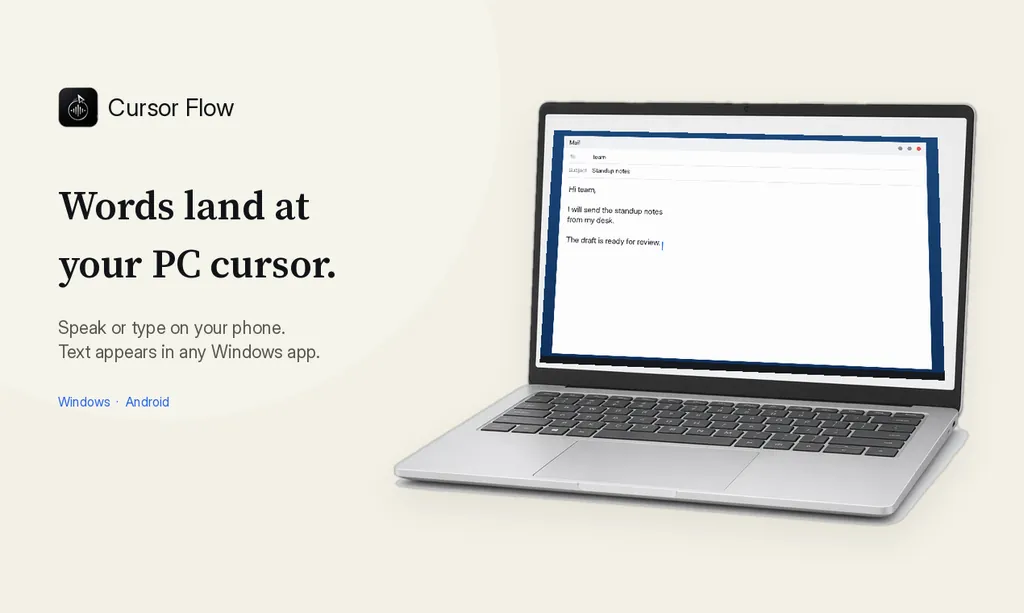
I built Cursor Flow so you can speak quietly into your phone, or just type on it, and the text lands at your PC cursor in email or chat. You can do all of this without it, of course. I wrote more about that in how to write at work without talking to your laptop.
Dealing with meeting nerves
Some nervousness is normal and does not mean anything is wrong. A few things help:
- Breathe out slowly before you speak: A long out-breath calms your body.
- Lower the stakes: Most comments in meetings are forgotten in a day. Yours do not need to be perfect.
- Count small wins: Speaking once per meeting is a fine goal at first.
- Talk to your manager: Ask them to invite your input sometimes: "Priya, what do you think?" Many managers are happy to do this.
If meeting anxiety is strong, lasts a long time or affects other parts of your life, talk to a professional. The NHS page on social anxiety describes the signs and the help available.
For remote and hybrid meetings
Video calls add new problems: talking over each other, lag and awkward silences. They also add new tools:
- Use the chat to add a point while someone else is speaking.
- Use the "raise hand" feature to claim a turn without interrupting.
- Turn on captions if they help you follow fast talk.
What not to do
- Do not try to match the loudest person: Your goal is to be heard once or twice with something useful, not to fill time.
- Do not wait for the perfect moment: It rarely comes. A good-enough moment is enough.
- Do not judge yourself on one meeting: Look at a month.
If your whole office feels draining, not just meetings, read our guides on open office anxiety and being an introvert in an open plan office.
How to do this with Cursor Flow
- Install both apps. Get Cursor Flow for Windows and Android from the download page.
- Pair once. Open the phone app and scan the QR code shown on your PC. See pairing if you get stuck.
- Click into any text field, then speak or type. Speak softly into the phone held close, or type and tap Send. The words are typed at your PC cursor, in the app you already use.
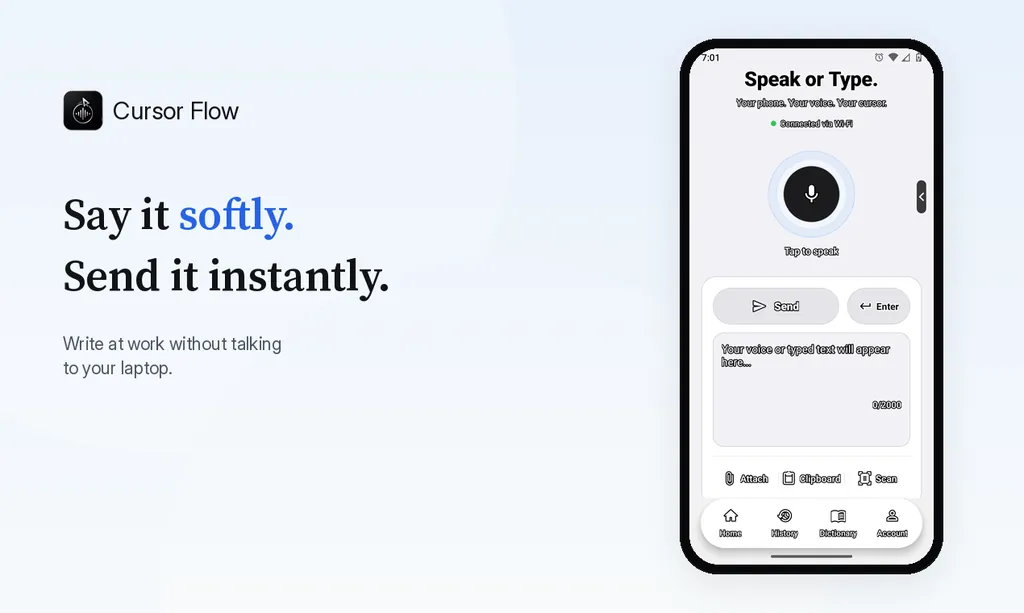
The free plan includes 2,500 dictation words a week, typing on your phone into your PC cursor, phone-to-PC files, images and clipboard, and Scan. See pricing, how phone to PC works, and silent typing from your phone.
FAQ
Why is it hard for introverts to speak up in meetings?
Many introverts like to think before they talk. Fast meetings reward people who think out loud, so by the time an introvert has a clear point, the topic has moved on.
How can I speak up in a meeting with confidence?
Prepare one or two points in writing before the meeting, and say one of them in the first ten minutes. Early contributions are easier, and they make later ones feel natural.
Is it OK to add my ideas after the meeting?
Yes. A short written follow-up with your idea or question is useful to everyone and is often more thoughtful than what was said in the room.
What if I get nervous every time I talk in meetings?
Nervousness usually drops with preparation and repetition. If it is severe or getting worse, consider talking to a professional about meeting anxiety.
Want faster follow-ups without talking out loud at your desk? Try Cursor Flow free. If you cannot speak at all, see typing on your phone to your PC.
- 57languages
- 2,500free words a week
- Windows + Androidone paired workflow