 Cursor Flow
Open Office Anxiety: Why It Happens and 9 Things That Help
Feel tense, watched or on edge at an open plan desk? Why open office anxiety is common, and 9 practical changes that make the workday feel calmer.
On this page
A quick note before we start: I am a product builder, not a therapist. If your anxiety is strong, lasts for months or follows you home, please talk to a doctor. The NHS page on social anxiety is a good place to check whether what you feel is more than everyday stress.
What open office anxiety feels like
People describe it in different ways:
- A tight, "on display" feeling when you sit down.
- Checking who can see your screen before you open anything personal.
- Not wanting to take calls or talk at your desk.
- Feeling drained by mid-afternoon even on an easy day.
- Relief the moment you put headphones on or leave the building.
If several of these sound familiar, you are far from alone. Search for "open office anxiety reddit" and you will find long threads of people saying the same.
Why it happens
Noise you cannot switch off
Phone calls, laughter and keyboards are unpredictable. Your attention keeps jumping to them, and that switching is tiring.
Visibility without a break
In a private space you choose when to be seen. In an open office you are seen all the time. Many people relax only when nobody can see their screen or face.
Speaking in public, all day
Every call, every quick question and every voice note happens in front of an audience. For introverts and anyone with social anxiety, that audience changes how you speak, or whether you speak at all.
No recovery space
There is often nowhere to reset for five minutes. Stress builds up without a release.
9 things that help
1. Choose a lower-exposure seat
Back to a wall, away from walkways, kitchens and printers. This one change cuts much of the "being watched" feeling. If seats are fixed, ask to move and keep the reason simple.
2. Use headphones as a boundary
Noise cancelling headphones reduce sound, but their bigger job is social. They tell people you are focusing. Agree with your team that a chat message is the way to reach you when they are on.
3. Put focus time in your calendar
Name it plainly ("Drafting proposal") so colleagues can see it. Most people respect a visible block more than an invisible wish.
4. Move calls to a room
If calls make you tense, book a small room or phone booth for them, even for 15 minutes. You can also ask for agendas in advance so calls feel more predictable.
5. Replace some talking with writing
Ask questions in chat, give updates in docs and follow up meetings in writing. You get time to think, and nothing happens in front of an audience.
6. Make dictation less public
Voice typing is fast, but speaking to a laptop at your desk can feel like being on speakerphone. A close mic lets you speak softly. Your phone held near your mouth works as one. I covered the full method in how to dictate in an open office without being heard. If you cannot speak at all, typing on your phone and sending the text to your PC is another option; Cursor Flow does this, and we explain it on the silent typing page.
7. Build in a daily reset
A short walk, a coffee outside or lunch away from your desk. Treat it as part of the job, not a reward.
8. Use your remote days well
If your company allows hybrid work, save collaborative tasks for office days and deep work for home. You get the social parts of the office without spending your best focus hours there.
9. Talk to your manager in terms of output
"I write faster in quiet. Could I sit in the quieter corner?" is a request about results. It is easier to approve than a complaint about the office.
What usually does not help
- Forcing yourself to get used to it: Some people adapt. Many just get tired.
- Hiding all day: Avoiding every interaction can make anxiety grow. Planned, limited contact is better than none.
- Buying expensive gear first: Try free changes like seat, schedule and habits before buying anything.
A note for introverts
Introversion and anxiety are not the same thing. Plenty of introverts are calm and confident, and plenty of extroverts feel anxious. But introverts often feel the cost of an open office sooner, because the setting asks for constant social energy. If that is you, our survival guide for introverts in open plan offices goes deeper into energy and boundaries.
When to get help
Speak to a doctor or a mental health professional if:
- You dread going to work most days.
- The feeling continues at weekends or on holiday.
- You have panic symptoms like a racing heart or trouble breathing.
- You are avoiding work tasks you used to manage.
There is nothing weak about asking for support. It is the fastest way to feel better.
How to do this with Cursor Flow
- Install both apps. Get Cursor Flow for Windows and Android from the download page.
- Pair once. Open the phone app and scan the QR code shown on your PC. See pairing if you get stuck.
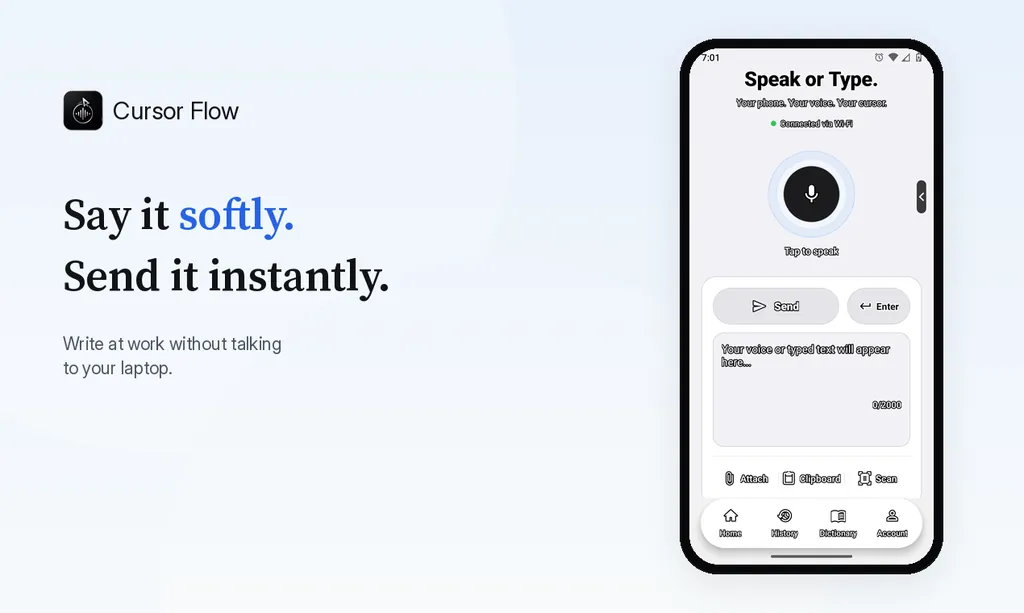
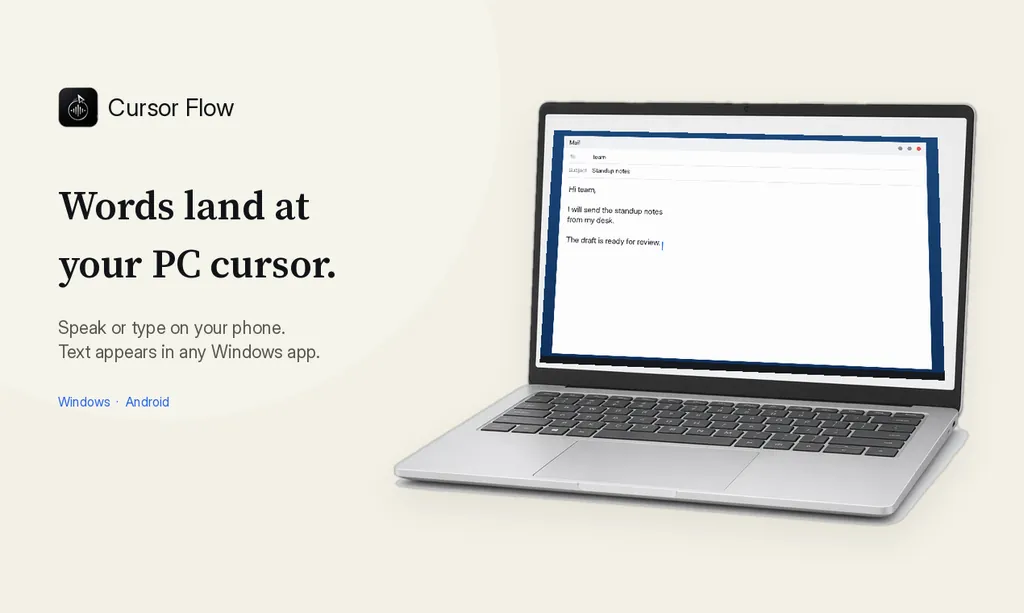
- Click into any text field, then speak or type. Speak softly into the phone held close, or type and tap Send. The words are typed at your PC cursor, in the app you already use.
The free plan includes 2,500 dictation words a week, typing on your phone into your PC cursor, phone-to-PC files, images and clipboard, and Scan. See pricing, how phone to PC works, and silent typing from your phone.
FAQ
Is open office anxiety a real thing?
It is not a medical diagnosis, but feeling tense, watched or overstimulated in an open plan office is very common. If the anxiety is intense, lasts for months or affects your life outside work, talk to a doctor.
Why do I feel watched in an open office?
Your screen, face and voice are visible to many people at once, and your brain keeps scanning for movement and noise. Most colleagues are focused on their own work, but the feeling is still real.
What is the fastest fix for open office anxiety?
Change your seat if you can. A desk with your back to a wall and away from walkways removes a lot of the feeling of being watched.
Should I tell my manager?
If it affects your work, yes. Describe the effect on your focus and suggest one concrete change, like a quieter desk or a few remote days.
If talking at your desk is the hardest part, you can try Cursor Flow free and see whether quiet phone dictation helps.
- 57languages
- 2,500free words a week
- Windows + Androidone paired workflow