 Cursor Flow
How to Stop Being Self Conscious When Speaking at Work
Feel self conscious every time you speak at work? Why it happens, and practical steps to feel less watched in meetings, calls and at your desk.
On this page
- What self consciousness really is
- Where it shows up at work
- Step 1: Move your attention outward
- Step 2: Prepare the first sentence
- Step 3: Slow down a little
- Step 4: Lower the stakes
- Step 5: Make speaking less public where you can
- Step 6: Practise in low-stakes moments
- Step 7: Be kind to your own voice
- What does not help
- When to get help
- A two-week practice plan
- How to do this with Cursor Flow
- FAQ
- Keep reading
I do not like speaking loudly in front of people, and talking to my laptop at a desk felt the same way. That feeling is the reason Cursor Flow exists. This guide covers the human side first, then the practical tools.
What self consciousness really is
When you feel self conscious, part of your mind steps outside and watches you: your voice, your face, your words. It feels like everyone else is watching too.
Psychologists have a name for the belief that others notice us much more than they do: the spotlight effect. A 2000 study by Gilovich and colleagues found that people tend to overestimate how much others notice their appearance and actions. Most people around you are busy thinking about their own work, their own call and their own lunch.
That does not make the feeling less real. It just means the audience in your head is bigger than the one in the room.
Where it shows up at work
- Meetings: your voice sounds strange to you, and you rush.
- Calls at your desk: you feel colleagues listening.
- Presentations: you focus on your hands, your face and your slides at once.
- Voice typing: speaking to a computer feels like talking to yourself in public. I explored this in dictation assumes you can talk out loud.
Step 1: Move your attention outward
The most useful single change is to focus on the other person, or on the task, instead of yourself.
- In a meeting, focus on the question you are answering, not on how you sound.
- On a call, picture the person you are helping.
- When presenting, look at one friendly face at a time.
Your mind can only hold so much. When it is busy with the task, there is less room to watch yourself.
Step 2: Prepare the first sentence
Self consciousness peaks in the first few seconds. If you know your first sentence word for word, you get past that peak before it builds up. "I have one update on the client project" is enough.
Step 3: Slow down a little
Nervous speakers rush, then feel worse because they rushed. Pausing for a breath between sentences feels long to you but sounds normal to listeners.
Step 4: Lower the stakes
Ask yourself: will anyone remember this sentence next week? Usually not. Most of what we say at work is forgotten quickly. That is freeing. Your words do not need to be perfect.
Step 5: Make speaking less public where you can
You do not have to do everything in front of an audience.
- Take long calls in a room: It removes the feeling of being overheard.
- Ask for written agendas: Preparation reduces on-the-spot pressure.
- Use chat for quick questions: Not everything needs your voice.
- Dictate quietly, or do not dictate at your desk. If you use voice typing, a close mic lets you speak softly. If speaking feels impossible, typing is fine.
This last point is where I built Cursor Flow. You can speak softly into your Android phone held close, and the words appear at your Windows PC cursor. If you cannot or do not want to speak, you can type on your phone instead; see silent typing from your phone. People next to you may still catch a word now and then, so keep private topics private.
Step 6: Practise in low-stakes moments
Confidence is built by repetition. Look for small chances to speak where it does not matter much:
- Ask one question in a team meeting.
- Give a short update in a stand-up.
- Make one easy phone call a day.
Each time, the alarm in your head gets a little quieter.
Step 7: Be kind to your own voice
Many people dislike hearing their own voice. That is normal. Your voice sounds different inside your head than it does to others. People around you are used to it and do not hear what you hear.
What does not help
- Avoiding all speaking: It feels good short term and makes it harder long term.
- Replaying every conversation at night: If you notice this, write down one thing that went fine and move on.
- Comparing yourself with the most confident person in the room. They have their own worries.
When to get help
If self consciousness is so strong that you avoid meetings, calls or social events, or it affects your life outside work, talk to a doctor. The NHS page on social anxiety explains the signs and the support available, including talking therapies.
A two-week practice plan
Small, regular practice beats one big push:
- Days 1 to 3: say one sentence in one meeting each day.
- Days 4 to 7: ask one question in a meeting and make one short call.
- Week 2: give one short update to your team, and notice afterwards what actually happened compared with what you feared.
Write down one line after each try. You will probably see that the fear before was much bigger than the moment itself.
How to do this with Cursor Flow
- Install both apps. Get Cursor Flow for Windows and Android from the download page.
- Pair once. Open the phone app and scan the QR code shown on your PC. See pairing if you get stuck.
- Click into any text field, then speak or type. Speak softly into the phone held close, or type and tap Send. The words are typed at your PC cursor, in the app you already use.
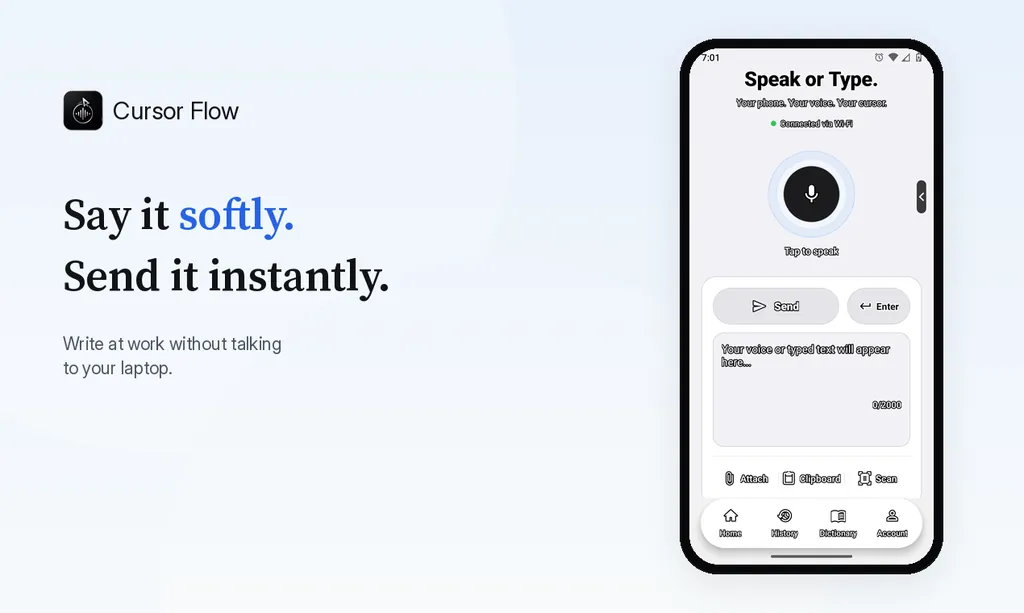
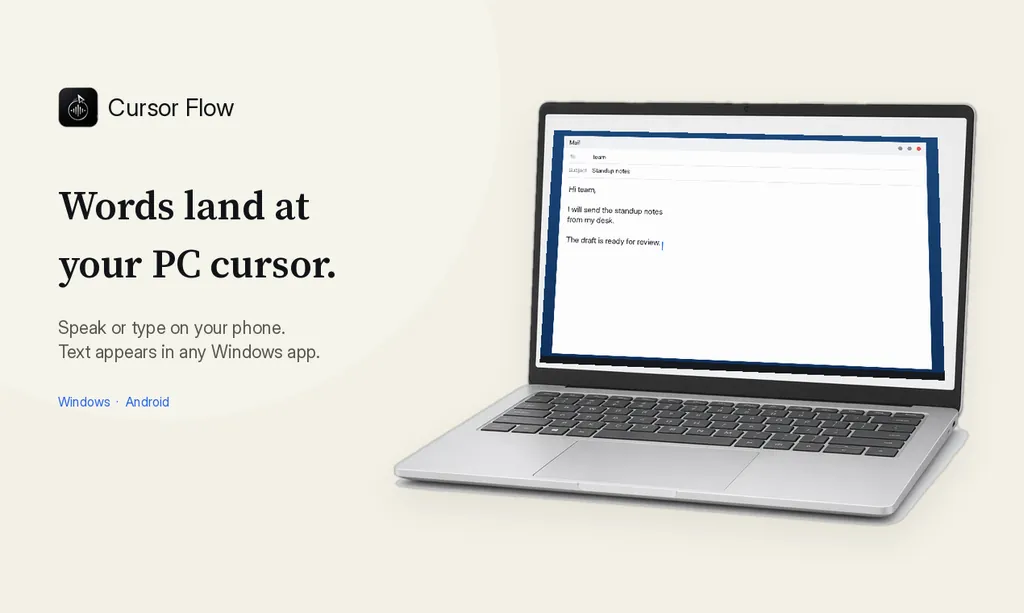
The free plan includes 2,500 dictation words a week, typing on your phone into your PC cursor, phone-to-PC files, images and clipboard, and Scan. See pricing, how phone to PC works, and silent typing from your phone.
FAQ
Why do I feel self conscious when I speak?
Your attention turns inward. You start watching your own voice, face and words as if from the outside, which makes you feel judged even when nobody is paying close attention.
Do other people notice how nervous I am?
Usually much less than you think. People are mostly busy with their own thoughts. Psychologists call the feeling that everyone is watching you the "spotlight effect".
How can I feel less self conscious talking at my desk?
Speak less often but with more preparation, move longer calls to a room, and use a close microphone if you dictate so you can keep your voice low.
When is self consciousness a sign of social anxiety?
When the fear is strong, lasts a long time and makes you avoid normal activities like meetings or calls. Then it is worth talking to a doctor.
If talking to your laptop is the part that makes you self conscious, you can try Cursor Flow free. For more on that feeling, read why voice typing feels awkward at work.
- 57languages
- 2,500free words a week
- Windows + Androidone paired workflow