 Cursor Flow
How to Focus in a Noisy Office: 11 Practical Fixes
Struggling to concentrate in an open plan office? 11 practical ways to block out office noise, protect deep work and get more done at a loud desk.
On this page
I build Cursor Flow from my room in Bangladesh, through power cuts, so I know focus is something you build around interruptions, not something you wait for. Office noise is different because it is people talking, and talking is the hardest sound to ignore.
Why office noise is so hard to ignore
Not all noise is equal. A steady fan is easy to tune out. A colleague's half-heard phone call is not, because your brain tries to follow the words. That is why open plan offices feel so tiring even when the volume is not very high.
Research backs this up. A 2021 study in the Journal of Management and Organization compared open plan office noise with a quieter private office sound level. Short task performance did not drop, but mood got worse and physical signs of stress, such as heart rate and skin conductivity, went up. In plain words: you might still get the work done, but it costs you more.
On top of sound, there are digital interruptions. Microsoft's Work Trend Index report on the infinite workday found that people using Microsoft 365 are interrupted on average every 2 minutes by a meeting, email or notification. A noisy room plus a noisy screen is a hard place to think.
11 ways to focus in a noisy office
1. Pick your seat on purpose
If your office has free seating, sit away from the kitchen, printers, entrances and meeting room doors. A seat with your back to a wall cuts both noise and the feeling of being watched. I covered seat choice for introverts in more detail in surviving an open plan office as an introvert.
2. Mask speech, not just volume
Speech is the problem, so cover it with steady sound. Brown noise, rain sounds or instrumental music at a low level hide the words around you. Keep it low. Loud masking sound is tiring too.
3. Use the right headphones
Active noise cancelling headphones are good at low, steady sounds like air conditioning. They are weaker against sudden voices, so combine them with masking sound. If you cannot wear headphones all day, use them only for focus blocks.
4. Protect one deep work block a day
Pick 60 to 90 minutes, ideally when the office is quietest. For many teams that is early morning or late afternoon. Put it on your calendar as a real event with a clear name, like "Writing: Q4 report".
5. Turn off notifications during that block
Close email, set chat to do not disturb, and silence your phone. Tell people how to reach you if something is urgent. Most things can wait an hour.
6. Batch the noisy work
Group calls, quick chats and voice notes together in one part of the day. That way your focus blocks stay clean, and your talking happens when you are already in "talking mode".
7. Move calls off your desk
If you have to talk, use a meeting room or a corridor. Your colleagues will thank you, and they are more likely to return the favour.
8. Write instead of talking where you can
Many quick questions can be a short written message. This reduces noise for everyone. If you find writing slow, see how to write at work without talking to your laptop.
9. Use quieter tools for writing
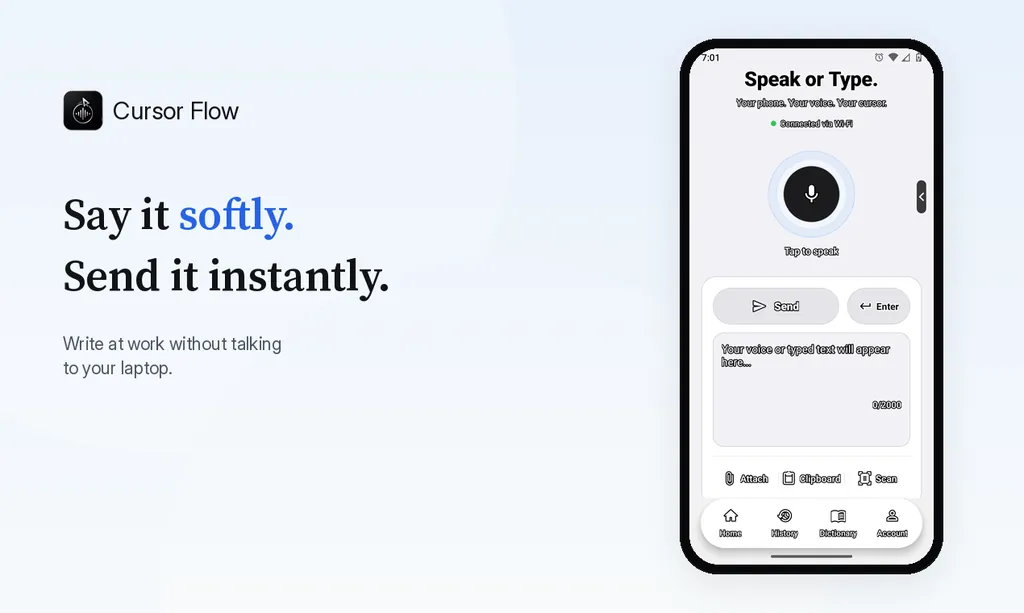
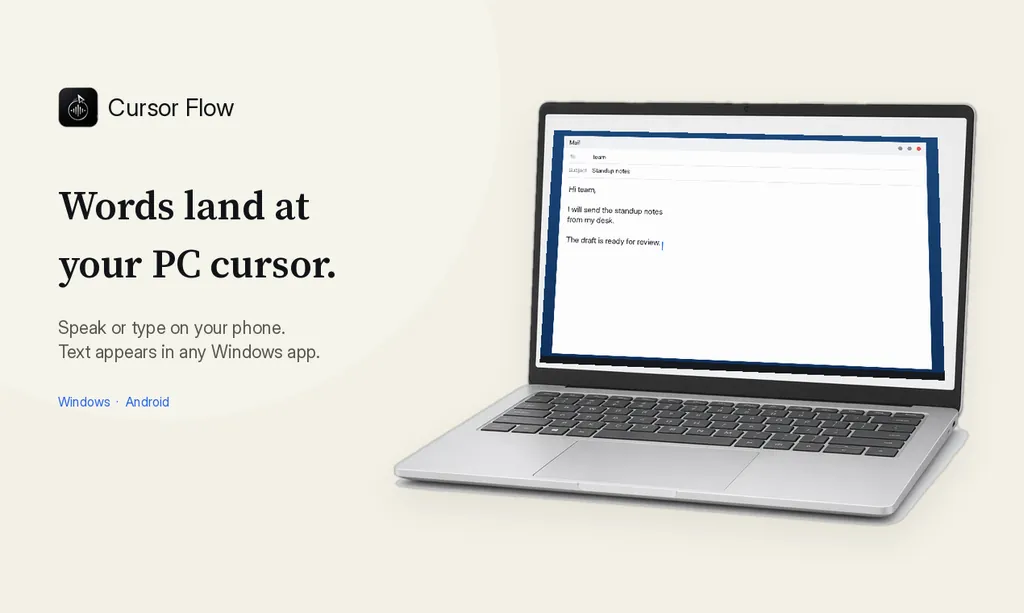
If you use dictation at your desk, a microphone close to your mouth means you can speak softly. Cursor Flow is built for this: you speak softly into your phone and the text types at the cursor on your Windows PC. When you cannot speak at all, you can type on the phone instead. It is not a booth, and it does not make you silent, but it keeps your voice low. For the cost side, compare it with buying a booth for quiet dictation.
10. Agree on team quiet hours
Suggest a team agreement, such as "no meetings before 11:00 on Tuesday and Thursday". It is easier to protect focus time when everyone has it.
11. Use the recovery breaks
Noise builds stress over the day. A five minute walk outside or a few minutes in a quiet room resets you more than scrolling at your desk.
A simple daily plan
| Time | What to do |
|---|---|
| First hour | Deep work block, notifications off, masking sound on |
| Late morning | Meetings and calls, in a room if possible |
| After lunch | Messages, email, admin |
| Mid afternoon | Short walk, then a second focus block if you can |
| End of day | Plan tomorrow's focus block |
Adjust the times to your office. The idea is to give hard work the quiet hours and easy work the noisy ones.
When noise is more than an annoyance
If office noise leaves you anxious, drained or unable to work most days, that is worth taking seriously. Read about open office anxiety for signs and steps. If it affects your health, talk to a doctor, and consider asking your employer for a change to your workspace.
Focus strategies for introverts at work
Introverts often feel office noise more because they spend energy on constant social input. Some ideas that help:
- Plan social time: Choose the lunches and chats you want, rather than reacting to every one.
- Use written updates: They let you share your work without a live audience.
- Keep a "do not disturb" signal: Headphones, a status message or a small desk sign tell people you are focusing.
- Recover before you are empty: Short breaks through the day work better than one long crash after work.
How to do this with Cursor Flow
- Install both apps. Get Cursor Flow for Windows and Android from the download page.
- Pair once. Open the phone app and scan the QR code shown on your PC. See pairing if you get stuck.
- Click into any text field, then speak or type. Speak softly into the phone held close, or type and tap Send. The words are typed at your PC cursor, in the app you already use.
The free plan includes 2,500 dictation words a week, typing on your phone into your PC cursor, phone-to-PC files, images and clipboard, and Scan. See pricing, how phone to PC works, and silent typing from your phone.
FAQ
How do I block out office noise without headphones?
Pick a seat away from walkways, kitchens and meeting rooms, face a wall, and use foam earplugs if your workplace allows them. Moving focus work to quieter hours also helps.
Is it normal to find open office noise stressful?
Yes. A 2021 study found that open plan office noise lowered mood and raised physical signs of stress, even when short task performance did not drop.
Is music or white noise better for focus?
It depends on the person. Many people focus better with steady sound like brown noise or instrumental music, because it masks speech. Songs with lyrics usually compete with reading and writing.
How long should a focus block be?
Start with 45 to 90 minutes. Long enough to get into the work, short enough that people will respect it.
Can I ask my manager for a quieter desk?
Yes. Explain the effect on your work and suggest one specific change, such as a desk away from the main walkway or a few quiet hours a week.
Make writing quieter too
If talking out loud to your computer is part of what makes the office feel loud, you can download Cursor Flow and try soft voice typing from your phone on the free plan.
- 57languages
- 2,500free words a week
- Windows + Androidone paired workflow